It usually starts with something small. Your mom pauses a beat too long at the…
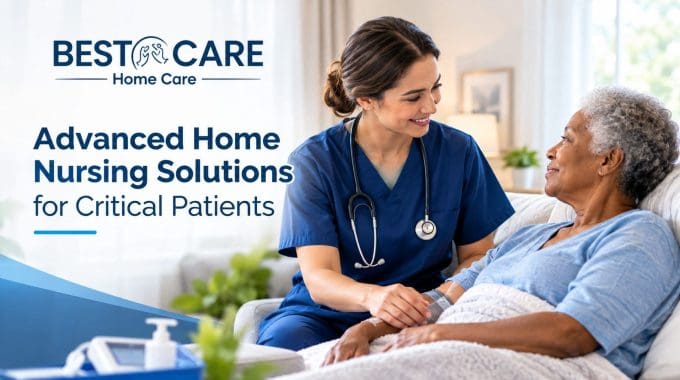
Advanced Home Nursing Solutions for Critical Patients
There’s a moment a lot of families hit without warning: a parent comes home from the hospital, or a spouse’s chronic illness suddenly needs daily attention, and everyone realizes nobody actually knows how to do this. This is exactly the gap Advanced Home Nursing is built to fill. You’re not a nurse. Nobody taught you how to change a dressing correctly or what to watch for after surgery. You just figure it out, because someone has to, usually while still going to work and picking up kids and trying to sleep.
Table of Contents
That’s usually around when people start asking about in-home nursing. Baltimore families in particular have been leaning on Medical Care at Home more bringing an actual trained nurse into the house instead of trying to wing it. It doesn’t mean giving up control of the situation. It just means someone who knows what they’re doing is now part of the picture, and the patient gets to recover at home instead of a facility that never quite feels like theirs.
What Is Advanced Home Nursing?
At its core, it’s Specialized Home Care clinical-level attention that happens wherever the patient actually lives, not in a hospital room or a rehab center. It’s a step up from someone helping with meals or getting dressed. This is for people with real medical needs: recovering from something serious, managing a complicated condition day to day, or still finishing up recovery after a hospital stay technically “ended.”
Most of the time, a nurse and the patient’s doctor build a plan together, with the family in on the conversation too. That plan says what needs to happen and how often, and it changes as the patient does because recovery isn’t static. Worth saying plainly: this is not a substitute for a hospital or an ER. If something’s a real emergency, that’s what 911 is for.
When Does a Patient Need Professional Nursing Support at Home?
Most recoveries don’t need a nurse. But some do, and it’s usually pretty clear when family care alone isn’t enough and Skilled Nursing Support makes sense:
- Coming home after surgery or a hospital admission
- Managing something chronic — heart disease, diabetes, COPD, that kind of thing
- A medication routine that’s too involved to track casually
- A wound or incision that needs real, trained attention
- Mobility that’s become unsafe for daily tasks
- Needing someone to actually monitor vitals, not just guess
- Prescribed treatments that require some clinical skill to carry out
- That awkward window right after hospital discharge, before things settle
If more than one of these rings a bell, it’s probably worth a conversation about home nursing rather than just muscling through it.
Key Components of Advanced Home Nursing Care
Depending on what the patient actually needs, In-Home Skilled Nursing usually covers a few core areas.
Medication Management and Administration
Keeping a medication schedule sounds easy until you’re the one accountable for it — a missed dose or a dose given at the wrong time can undo real progress. A nurse helps keep this on track, handling administration when it’s called for, and keeping the family updated rather than leaving them guessing.
IV Therapy and Prescribed Treatments
Things like IV therapy used to mean a trip to the clinic every single time. Now, when it’s clinically appropriate, a trained nurse can handle it at home, staying in step with the rest of the care team
Wound Care and Recovery Support
A wound isn’t something you just check on now and then. Good Home-Based Nursing Care means consistent attention watching for infection, using proper technique, and flagging the doctor the moment something looks off instead of waiting.
Health and Vital-Sign Monitoring
Blood pressure, heart rate, oxygen these numbers tell a story, and catching a bad trend early can matter a lot. Regular monitoring also gives the family something concrete to go on instead of just hoping things are fine.
Mobility, Positioning, and Transfer Assistance
Getting out of bed, moving to a chair, shifting position so pressure sores don’t develop — this is exactly where falls and injuries tend to happen. A nurse knows how to help with this safely, and honestly, it takes a real physical burden off family caregivers too.
Post-Hospitalization Care
The days right after discharge are often harder than anyone expects. New medications, new limitations, instructions that don’t quite make sense the first time you read them — nursing support here helps someone actually follow the plan instead of piecing it together on their own.
Benefits of Advanced Nursing Care at Home
Bringing in Professional Nursing Care at Home tends to change things for the whole family, not just the patient:
- Recovery happens somewhere that actually feels like home
- Attention is one-on-one instead of split across a facility’s caseload
- Medication schedules and care plans are more likely to actually get followed
- Family members stop having to handle medical tasks they were never trained for
- There’s real peace of mind when someone can’t be there every hour
- Caregiver burnout eases, because it’s not all on one person anymore
- Problems tend to get caught earlier, since someone trained is actually watching
- Some families opt into 24/7 Home Care Support for added coverage during higher-need periods
Every case is different, and results will vary person to person — but this kind of steady attention generally makes the whole process feel less like free fall.
Who Can Benefit From In-Home Nursing Care in Baltimore?
In-Home Nursing Care benefits a wider group than most people assume. Seniors dealing with age-related decline, people recovering from surgery or serious illness, patients managing chronic conditions, and anyone dealing with wounds or mobility issues tend to do better with professional support at home. For a lot of families here, Expert Nursing Services in Baltimore, MD end up being the practical answer for real medical support, without pulling someone out of the home they know.
How to Choose the Right Home Nursing Provider
Choosing a provider of Private Nursing Support isn’t a decision to rush. Before signing on with anyone, it’s worth asking:
- Is the staff actually licensed and properly qualified?
- What’s their real experience and training, not just their pitch?
- What’s genuinely included in their services — and what’s not?
- How is the care plan built, and how often does it get updated?
- How do they keep the family and the physician in the loop?
- What does scheduling look like, especially if something comes up?
- Do they seem to actually understand this patient’s specific situation?
- What do other families say about their track record and safety?
Asking these questions upfront tends to save a lot of headaches later.
Why Families in Baltimore Choose BESTCARE Home Care
A lot of Baltimore families land on BESTCARE Home Care because it’s Personalized Nursing Care built around the person, not handed out from a template. Their Expert Nursing Care covers medication management and administration, IV therapies, wound care, mobility assistance, post-hospitalization support, and ongoing health monitoring — all shaped by a plan made for that specific patient.
As a longtime provider of home healthcare in Baltimore, Maryland, BESTCARE works directly with patients and families to figure out what’s actually needed, day to day, not just on paper. For anyone looking into Expert Nursing Services in Baltimore, MD, that’s really the difference — clear communication and care that doesn’t feel impersonal or rushed.
Conclusion
Caring for someone who’s critically ill, or working through a hard recovery, is genuinely difficult — and it shouldn’t have to fall entirely on family members figuring it out as they go. Advanced home nursing brings real clinical skill into the house itself, covering medications, wound healing, health monitoring, and safe movement, all while the patient stays somewhere that actually feels like home.
If your family is looking into Expert Nursing Services in Baltimore, MD, BESTCARE Home Care is ready to talk through what your loved one actually needs and build something around it. Call 301-337-6865 or visit the website to learn more about Compassionate In-Home Care for your family.
Frequently Asked Questions
What is advanced home nursing care?
Medically focused nursing care delivered at home, guided by an individualized plan.
Who may need nursing care at home?
Anyone recovering from surgery or illness, managing a chronic condition, or dealing with limited mobility.
Can nurses help with medication administration at home?
Yes, trained nurses can assist with administering medication when appropriate.
Is wound care available through home nursing services?
Yes, including monitoring, infection prevention, and physician updates as needed.
How can home nursing support patients after hospitalization?
It helps patients follow discharge instructions and manage medications correctly during recovery.

Related Posts